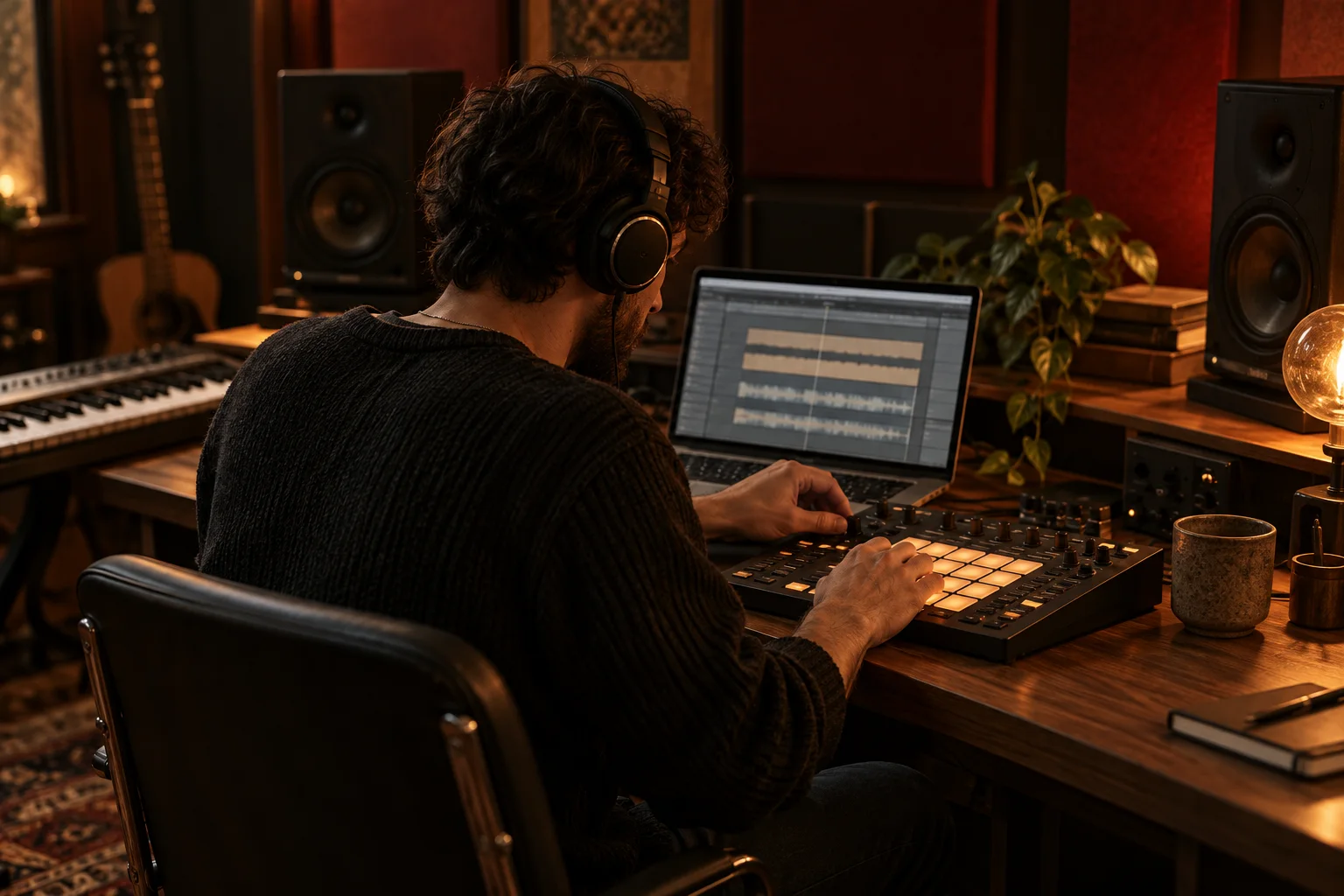
The Tool: Your Favorite Songs and Your Favorite Sound
For many music fans, there are songs they love and play continuously during certain periods of their lives, yet they can’t shake the feeling that the song is “just missing that one thing.” Perhaps it is an additional verse or a particular instrumental they heard somewhere else. For others, the song feels perfect, but curiosity creeps in. They want to know what a famous jam band’s most popular hit would sound like over a hip-hop beat, or how a bossa nova arrangement would sound with their favorite singer’s voice.
Spotify’s upcoming AI-powered remix and cover tool offers fans a way to explore that curiosity. On October 20, 2026, Spotify and Believe announced an agreement covering participating artists and labels at Believe and TuneCore. The tool is planned as a paid add-on for Spotify Premium subscribers, allowing fans to create versions of existing music within Spotify’s platform. The companies say those versions will link back to the original track and artist, with royalties paid to participating artists and rights holders when they are streamed.
The appeal extends beyond the listener. A remix could introduce the original song to an entirely new audience and breathe new life into a track that has long since passed its peak streaming period. Renewed interest could create opportunities for an artist to release new music or consider touring around a catalog that has regained popularity.
Believe and TuneCore describe a two-step consent process: artists first decide whether to be considered for AI programs, then separately whether to participate in the Spotify partnership. As Believe chief executive Denis Ladegaillerie put it, “The artist must consent first, period.”
Provided artists retain meaningful control over how their music is used, Spotify’s remix feature has the potential to benefit the artists involved. The harder question begins after that initial consent. As generating another version becomes part of everyday listening, can artists continue to influence how their work is transformed, circulated and monetized?
That is the broader test for this technology. Its long-term value to artists depends on whether their control remains meaningful as the number of versions grows.
The Risks: Everything That Glitters Isn’t… Platinum
What Spotify currently frames as a space for fan creativity could help normalize a broader ecosystem of AI-generated music derived from existing recordings and compositions. Competing platforms have incentives to offer similar experiences. Their approaches to permission, compensation and creative control will determine what that expansion means for artists.
The concern becomes more concrete when we ask what an artist actually agrees to. Permission to make a cover could encompass a relatively faithful reinterpretation. Permission to generate remixes could reach transformations the artist finds objectionable. An artist who welcomes a new arrangement might feel differently about altered lyrics or a version that changes the meaning of the song.
A consent process must accommodate those distinctions. Which transformations are permitted? Can the artist exclude particular recordings? Can participation be withdrawn? What happens to versions already generated and attracting listeners? Who decides whether an objectionable remix remains available?
Keeping a product inside one platform provides a place to administer those decisions. Whether the artist can obtain a particular outcome depends on the terms and procedures that platform adopts.
Scale makes those procedures more important. An artist can listen to and approve a handful of proposed remixes. Reviewing thousands of fan-generated versions is a different undertaking. If meaningful control requires the artist to locate every problematic version and challenge it individually, the practical burden grows with the product’s success.
There is also the question of listening and revenue. These remixes could drive traffic back to original recordings and create additional royalty opportunities. They could also redirect listening toward the generated versions.
The financial result depends on how royalties are calculated. If remix streams enter an existing pro-rata pool, holding its revenue constant, they redistribute shares of that pool. Additional subscription revenue or genuinely new listening could change the outcome. More versions alone do not establish that the original artist earns more.
These possibilities explain why control and compensation have to be considered together. An artist evaluating the creative trade-off needs to understand both the uses being authorized and the economic benefit attached to them.
The Law: Who Will Own the Art?
It follows that we would ask the question that has accompanied AI’s growing role in creative work: who will own the art?
For a remix, the answer begins with three layers. The composition is the song as written. The sound recording is the particular recorded performance. The fan and the AI system then contribute whatever is new in the resulting version.
Those layers can involve different owners and permissions. Section 103 of the Copyright Act limits copyright in a derivative work to its new, protectable material. The existing song and recording retain their own protection.
Whether the new material qualifies for protection depends on human authorship. In March 2025, the D.C. Circuit held in Thaler v. Perlmutter that the Copyright Act requires a human author. The case concerned a work presented as autonomously generated by a machine.
The Copyright Office’s January 2025 report addresses the more difficult situation in which a person uses AI as a tool. Under its analysis, prompts alone do not provide sufficient control over current systems’ output to establish authorship. Human expression preserved in the output, or sufficiently creative selection, arrangement or modification, can qualify.
Asking for a bossa nova version of a favorite song therefore does not establish the fan’s authorship. Recording a new vocal or making creative edits introduces human contributions that require their own assessment. Spotify’s participation and user terms will also determine what rights contributors grant to the platform. Those terms cannot create copyright in material that does not qualify.
For the original artist, however, ownership of the new contribution is only part of the creative-control question. The authority to transform the underlying song matters just as much.
Spotify has announced publishing agreements as part of its arrangements with Universal Music Group and Kobalt. The scope of those agreements determines which participating compositions and uses they authorize.
Without an applicable direct license, the U.S. compulsory mechanical license supplies a narrower route. Section 115 generally becomes available after authorized distribution of phonorecords of a nondramatic musical work to the U.S. public, subject to the statute’s conditions. Its arrangement provision states that an arrangement:
“shall not change the basic melody or fundamental character of the work”
It also states that the arrangement:
“shall not be subject to protection as a derivative work under this title, except with the express consent of the copyright owner.”
These statutory limits connect the ownership question directly to creative control. A change in genre does not automatically cross the boundary. A transformation that changes the basic melody or fundamental character requires authorization beyond the compulsory license.
For a self-administered songwriter, or a writer with a small publisher outside the participating agreements, clearing the recording through Believe does not clear the song. Someone must still hold the authority to approve uses beyond those statutory limits.
TuneCore artists also need to examine the relationship between their recording and publishing permissions. Section 1.2 of its AI terms includes compositions enrolled in its Publishing Administration Services within the artist’s covered content. An artist’s participation decision can therefore involve both layers.
Understanding who controls each right is essential to understanding who can say yes, impose a limitation or object later. A performer’s creative concerns and the authority held by a recording owner or publisher will not always sit with the same person.
The Future: Short-Term Possibilities, Long-Term Control
In the short term, fans will have new ways to experience familiar music. These remixes could connect genres and their audiences, spark ideas for artists and listeners, and renew interest in older recordings. The question of creative control remains important precisely because the product has an understandable appeal: what happens when that experience becomes normal?
Artists’ control will depend on arrangements that continue working after the initial invitation to participate. Those arrangements must identify the permitted uses, establish a workable process for objections and withdrawal, and explain how resulting revenue reaches the people whose work made the remix possible.
TuneCore’s public terms show why the details matter. For an Experimental Launch, the artist receives 50% of defined Experimental Launch Net Receipts, net of reasonable out-of-pocket expenses and applicable duties and taxes. If TuneCore receives nothing for that launch, the artist waives claims to fees or royalties from TuneCore and the partner. Formal Launch financial terms are presented separately for approval.
Spotify’s proposed research preview resembles the Experimental Launch definition. Artists should establish which terms govern their participation and whether product-specific provisions change the standard rules.
The ability to inspect the accounting is another part of that decision. TuneCore’s AI terms operate together with its Music Distribution Terms, which state that the artist:
“shall have no right to inspect or audit Company’s books and records or the books and records of any Consumer Store.”
Those terms also make statements “conclusively binding” after one year and require objections and related lawsuits within that period. We explored these provisions in AI Music Deals Promise Compensation. Artists Need the Right to Check.
These provisions affect how much practical control accompanies the promise of compensation. Artists need a way to connect the permission they granted, the version that resulted and the payment reported. That connection also supports objections when a use exceeds the agreed scope.
This is part of the operating infrastructure Legato is building: connecting contracts, rights and financial data so permissions and obligations can be followed through the workflows they govern. A reported use without documented authorization, or a compensable use without a corresponding payment, calls for investigation. Neither discrepancy proves an underpayment.
Opinions vary on whether AI should be used in music creation. Its growing use makes the question of control increasingly consequential. Artists should be able to decide how their work participates in these experiences, understand the financial trade-offs and exercise the rights they retain.
A familiar song can take on a new life. Whether its creator has a meaningful voice in that life will help determine whether this technology empowers artists or gradually weakens their influence over the work they created.
- Spotify and Believe licensing announcement, October 20, 2026
- Music Business Worldwide: Spotify’s agreement with Believe, October 20, 2026
- Spotify and UMG recorded music and publishing agreements, May 21, 2026
- Spotify and Kobalt licensing agreement, August 13, 2026
- TuneCore: AI and Data Protection Program Terms and Music Distribution Terms
- 17 U.S.C. §103: Copyright in derivative works
- 17 U.S.C. §115: Compulsory mechanical licensing
- Thaler v. Perlmutter, D.C. Circuit, March 18, 2025
- U.S. Copyright Office: Copyright and Artificial Intelligence, Part 2, January 2025
Sources and product descriptions current as of October 22, 2026.